
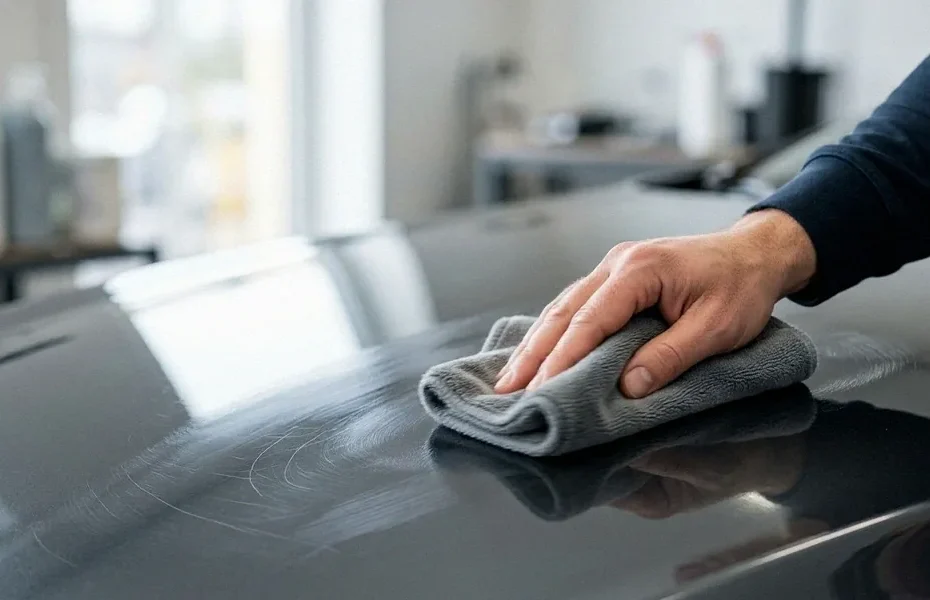
Cleaning and Scratch Removal for Acrylic Sheet and Perspex
If you have ever wiped down an acrylic display with a bit of kitchen roll and a squirt of window cleaner, only to watch it turn cloudy before your eyes, you are in good company. It happens in home workshops, retail units, and fabrication studios all over the UK every single week. Acrylic sheet and Perspex are brilliant materials to work with, but they scratch, haze, and hold onto dust far more readily than glass. The good news is that almost every mark, scuff, and smudge can be dealt with using the right technique and a handful of affordable products. In this guide, we walk through how we clean, polish, and restore acrylic sheet, Perspex, laser-cut parts, and retail displays, using products you can actually buy in the UK.
Why Acrylic Sheet and Perspex Need Special Care
Acrylic is a much softer material than glass. On the Mohs hardness scale, glass sits around 5.5, while acrylic is closer to 2 to 3. That means everyday items such as dust particles, ring pulls, and even a dry cloth can leave fine scratches. It also means that ammonia-based cleaners like Windex can attack the surface and cause crazing, a network of tiny cracks that makes the sheet look permanently hazy. We have seen brand-new Perspex panels ruined by a single well-intentioned clean with the wrong spray.
Perspex is a UK brand of acrylic sheet manufactured by Perspex Distribution, and it behaves in exactly the same way as any other cast or extruded acrylic. The brand name is often used generically in the UK, a bit like Hoover for vacuum cleaners, but the care rules are the same across the board.
The difference between acrylic sheet and polycarbonate
People often mix these two up. Acrylic is clearer, more scratch-resistant, and cheaper, which makes it ideal for displays, signage, and laser-cut parts. Polycarbonate is far tougher and impact-resistant but softer on the surface, so it scratches more easily. Cleaning products that suit one may not suit the other, and ammonia is bad news for both. If you are unsure what you have, tap it: acrylic gives a sharp, glassy ring, while polycarbonate sounds duller.
Common cleaning mistakes that cause hazy surfaces
- Using ammonia-based sprays such as Windex, which etch the surface over time.
- Wiping with dry paper towels, which drag dust across the sheet like sandpaper.
- Spraying cleaner directly onto the acrylic rather than onto the cloth.
- Using alcohol or acetone-based solvents that can craze or melt the surface.
- Rubbing vigorously in circles instead of using light, straight passes.
Safe Cleaning Methods for Acrylic Displays and Sheets
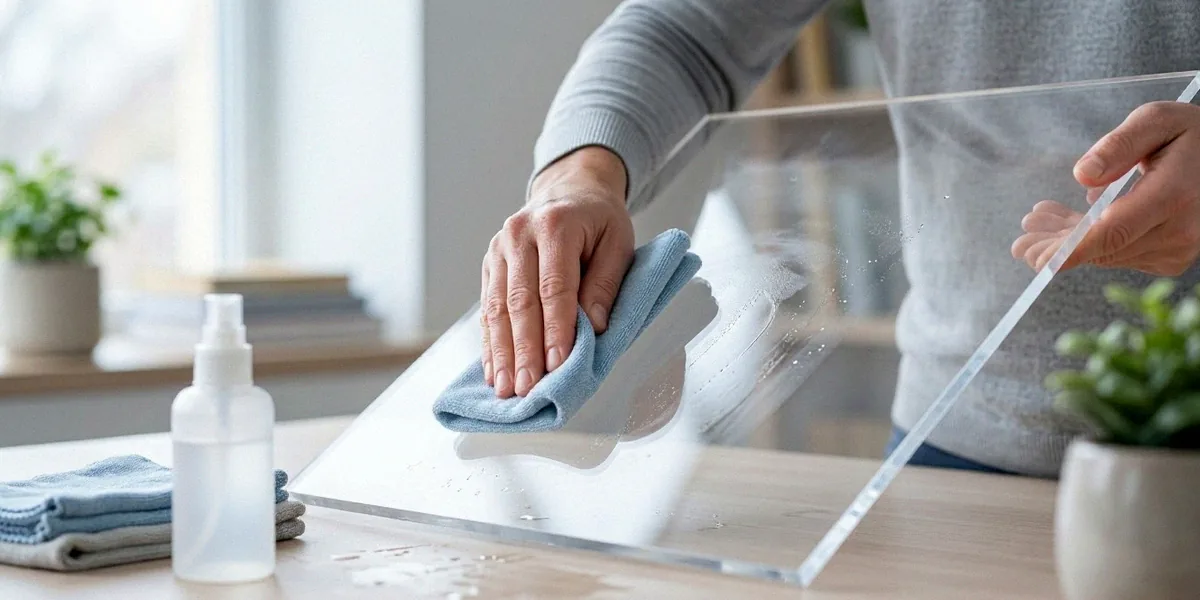
Our standard cleaning routine is deliberately boring, because boring works. Start by blowing or brushing off loose dust with a soft brush or a can of compressed air. Then mix a few drops of mild washing-up liquid, or a gentle brand like Ecover, into a bowl of lukewarm water. Dip a clean microfibre cloth, wring it out so it is damp rather than dripping, and wipe the surface in straight lines. Rinse with a second damp cloth and buff dry with a third, dry microfibre cloth. Never use paper towels, and never use hot water, which can soften the sheet.
Daily dusting and routine care
For retail displays and workshop panels that are handled often, a daily pass with an anti-static duster keeps dust from bonding to the surface. Anti-static sprays designed for plastics are widely available and reduce the static charge that pulls dust out of the air.
Deep cleaning for sticky residues
Sticker glue, tape residue, and fingerprint oils need a little more persuasion. A diluted solution of mild soap and water left to sit for a minute usually loosens them. For stubborn adhesive, a purpose-made acrylic cleaner or a small amount of white spirit on a microfibre cloth will work, but test on a hidden corner first.
Products to avoid: ammonia, alcohol, and abrasives
Keep ammonia-based cleaners like Windex well away from acrylic sheet. The same goes for isopropyl alcohol, acetone, bleach, and any cream cleaner or scouring pad. These will either craze the surface or scratch it beyond what a home polish can fix.
How to Remove Scratches from Perspex and Acrylic Sheet
Scratch removal is really a case of matching the abrasive to the depth of the damage. We work from coarser to finer, never the other way around, and we always test on an offcut if we can. Novus Plastic Polish No. 2 and No. 3 are widely available in the UK for scratch removal, with No. 3 handling heavier marks and No. 2 used for final finishing and light scratches.
Assessing scratch depth: light, medium, deep
- Light scratches — visible only under angled light, felt with a fingernail barely or not at all. Novus No. 2 or a fine polishing compound usually removes these.
- Medium scratches — clearly visible, catch a fingernail slightly. Start with 1500 to 2000-grit wet sandpaper, then polish with Novus No. 3 and finish with No. 2.
- Deep scratches — you can feel them easily. Begin at 800-grit wet sandpaper, work up through 1200, 1500, 2000, then polish with Novus No. 3 followed by No. 2.
Hand polishing vs. machine polishing
Hand polishing is slower but safer, especially on small or thin sheets. Use a clean microfibre applicator pad and work in small circles with light pressure. A dual-action polisher speeds things up on larger panels, but keep the speed low and the pad moving, or you will generate heat and distort the sheet.
Using a heat gun for deep scratches (with caution)
A heat gun can soften the surface enough for very deep scratches to flow closed, but it is a last resort. Keep the nozzle moving, keep it at least 20 cm from the sheet, and practice on scrap first. Overheating causes bubbling, warping, and a permanent haze that no polish will fix.
Restoring Clarity to Laser-Cut Acrylic Edges and Surfaces
Laser cutting acrylic can leave frosted edges that require flame polishing or sanding to bring back clarity. The cut edge is essentially a matte, slightly rough surface, and it will never look like a cast edge until you finish it. UK maker spaces such as Makespace Cambridge offer access to laser cutters and plastic fabrication tools, and many of their members learn edge finishing the same way we did: by ruining a few offcuts first.
Flame polishing techniques for edges
Flame polishing uses a small hydrogen-oxygen torch or a specialised acrylic flame polisher. You pass the flame quickly along the edge, and the surface tension pulls it smooth and glossy. It takes practice. Move too slowly and the edge bubbles; move too fast and nothing happens.
Wet sanding and buffing laser-cut parts
If you do not want to risk a flame, wet sand the edge progressively from 400-grit up to 2000-grit, then buff with Novus No. 2 or a plastic polishing compound. It takes longer, but it is far more forgiving and gives a consistent, satin-to-gloss finish.
When to seek professional plastic fabrication help
For large panels, complex assemblies, or display pieces where a flawless finish matters, it is worth talking to a professional plastic fabrication shop. Many London laser cutting services also offer flame polishing and edge finishing as a standard add-on, and the results are usually better than what most of us can achieve in a home workshop.
Preventative Care for Acrylic Displays in UK Businesses
Retail and exhibition displays take a beating. Customers lean on them, staff clean them in a hurry, and they sit under hot lights for hours. A little prevention goes a long way. UK companies like Display Products Online and Perspex Display Solutions supply protective films and anti-static cleaners that are designed specifically for this environment.
Choosing the right protective film
Peel-off protective film is essential during transport and installation. Leave it on until the display is in position, then remove it slowly. For long-term protection on high-touch surfaces, a low-tack film or an anti-scratch coating is worth the extra cost.
Handling and storage best practices
Store sheets vertically in a dry, dust-free area, with the protective film intact. When handling, wear clean cotton gloves and lift by the edges. Never slide sheets across each other, as this is one of the fastest ways to create a network of fine scratches.
Cleaning schedules for high-traffic areas
We recommend a daily dust and a weekly damp clean for retail displays, with a deeper polish once a month. Keep a dedicated microfibre cloth and a bottle of mild soap solution behind the counter so staff are never tempted to grab the nearest glass cleaner.
Recommended Products and Tools for UK Makers
You do not need a huge kit to keep acrylic looking sharp. These are the items we keep on our own benches, with rough UK prices.
Polishing compounds and kits
- Novus Plastic Polish No. 2 and No. 3 — around £10 to £15 per bottle from RS Components and other UK suppliers.
- Xerapol — a UK-favourite scratch remover paste, usually £8 to £12.
- Micro-Mesh kits — progressive abrasive pads from 1500 to 12000 grit, typically £20 to £35.
- Wet sandpaper — 800 to 2000 grit, a few pounds per pack from Screwfix or Amazon UK.
Microfibre cloths and applicators
Buy them in packs. A decent set of microfibre cloths from Screwfix or Amazon UK costs under £10, and dedicated foam applicator pads are a couple of pounds each. Keep separate cloths for cleaning and polishing so you are not dragging grit back onto a finished surface.
Safety gear: gloves and eye protection
Wet sanding and polishing throw fine debris, and flame polishing is obviously a fire risk. Nitrile gloves, safety glasses, and a small fire extinguisher or damp cloth nearby are non-negotiable if you are working with a torch.
FAQ
Can I use Windex on acrylic sheet?
No. Ammonia-based cleaners like Windex can damage acrylic sheet and should be avoided. They cause crazing, a fine network of cracks that makes the surface look permanently cloudy.
What is the best way to remove scratches from Perspex?
Work from coarse to fine. Start with 800-grit wet sandpaper for deep scratches, move up to 2000-grit, then polish with Novus Plastic Polish No. 3 followed by No. 2. Novus No. 2 and No. 3 are widely available in the UK for scratch removal.
How do I clean laser-cut acrylic edges?
Laser cutting acrylic can leave frosted edges that require flame polishing or sanding. Flame polishing with a small torch gives the clearest result, while wet sanding from 400 to 2000-grit followed by buffing is the safer option.
Where can I access laser cutters and plastic fabrication tools in the UK?
UK maker spaces such as Makespace Cambridge offer access to laser cutters and plastic fabrication tools, usually on a membership basis. Many London laser cutting services also offer edge finishing and polishing as a paid add-on.
Is Perspex the same as acrylic sheet?
Yes. Perspex is a UK brand of acrylic sheet manufactured by Perspex Distribution. The name is often used generically in the UK, but the material and its care requirements are the same as any other cast or extruded acrylic sheet.
With the right technique and a small kit of UK-available products, acrylic sheet and Perspex can be kept looking new for years, whether it is a shop display, a laser-cut prototype, or a window panel in a home workshop. We would love to hear your own tips and tricks, so if you have a favourite polish or a clever cleaning hack, share it with the community.