
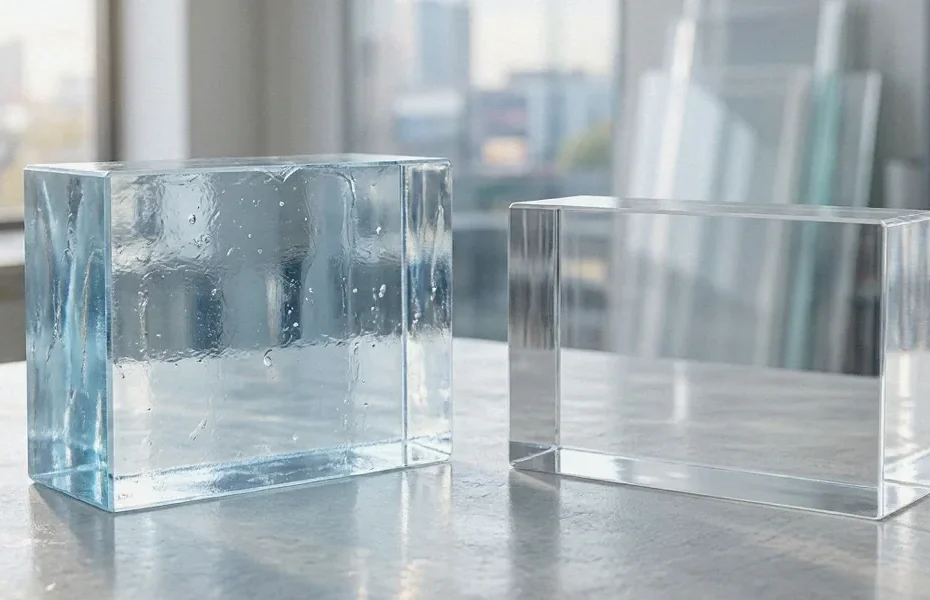
Cast vs Extruded Acrylic: Which to Choose for Your Next Project?
You’ve sketched out your design, measured twice, and you’re ready to order your acrylic sheet. Then you hit the dropdown menu: cast or extruded? For a lot of UK makers, that single choice is where a straightforward project suddenly feels complicated. Pick the wrong one and you could end up with cloudy laser-cut edges, hairline cracks around drilled holes, or a bill that’s higher than it needed to be. The good news is that cast and extruded acrylic aren’t rivals so much as specialists — each one excels at different jobs. In this guide, we’ll walk through how both materials are made, how they compare on cost, clarity, and machinability, and how to match the right sheet to your project, whether you’re building acrylic displays for a shop or prototyping a new product in your workshop.
What Is Cast Acrylic (and Why Do We Love It?)
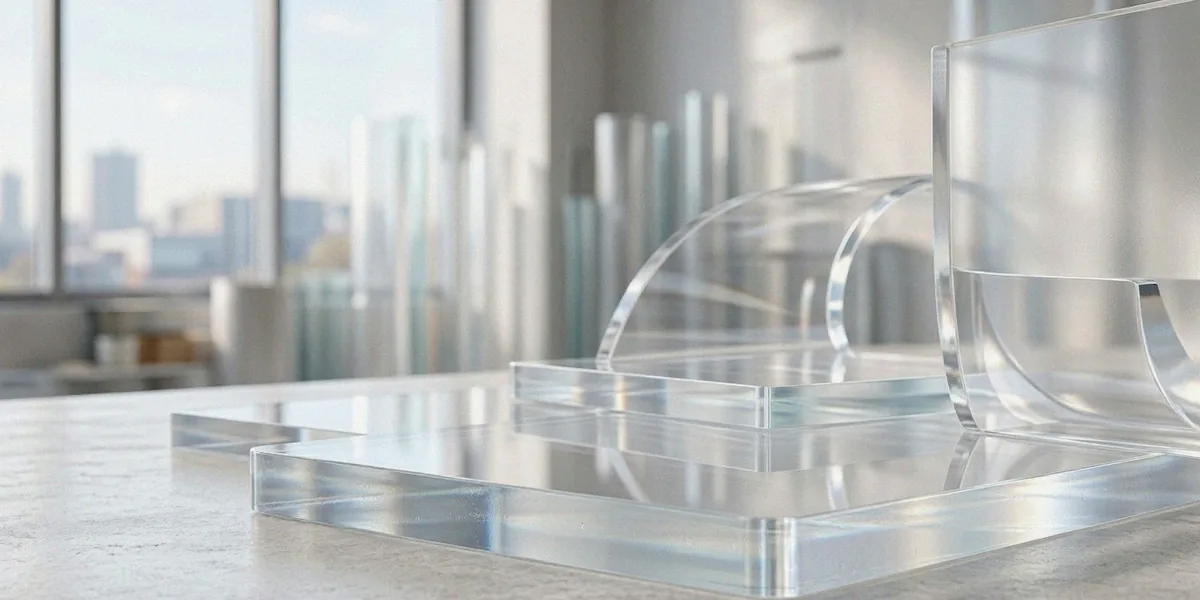
Cast acrylic is the original, premium form of acrylic sheet. It’s made by pouring a liquid monomer between two glass plates and letting it polymerise into a solid sheet. Because the material sets slowly under controlled conditions, the resulting sheet has a higher molecular weight than its extruded cousin — and that shows up in the finish. Perspex is a well-known brand of acrylic sheet in the UK, and its cast range is what most people picture when they think of high-quality acrylic. Cast acrylic is available in a huge range of colours, thicknesses, and finishes, from crystal-clear to frosted, opal, and fluorescent shades.
How Cast Acrylic Is Made
The process starts with methyl methacrylate monomer, which is mixed with a catalyst and sometimes colourants, then poured into a mould formed by two polished glass plates separated by a gasket. The filled mould is heated in an oven or water bath so the monomer polymerises into a solid sheet. Once cooled, the glass plates are separated and the sheet is trimmed. This cell-casting method is slower and more labour-intensive than extrusion, which is part of why cast acrylic costs more.
Key Properties and Advantages
- Excellent optical clarity, with a slightly softer surface that machines and polishes beautifully
- High molecular weight gives it strong resistance to stress cracking around drilled or tapped holes
- Available in a vast colour and thickness range, including specialist and textured finishes
- Responds well to flame polishing, diamond polishing, and deep routing
- Consistent colour and light diffusion across a sheet, which matters for signage and lighting panels
Common UK Applications
Cast acrylic is the go-to for jobs where the edge finish and clarity are on show. Think retail display stands, museum cases, engraved signage, boat windows, and machined components. Acrylic displays are a common application where cast acrylic is often preferred for its clarity and edge finish — the crisp, glass-like look you get after flame polishing simply isn’t achievable in the same way with extruded sheet.
What Is Extruded Acrylic (and When Is It the Smarter Choice?)
Extruded acrylic is made by feeding acrylic pellets into a heated barrel and pushing the molten polymer through a die to form a continuous sheet. It’s a faster, more automated process, which is why extruded sheet typically costs less than cast. It also has tighter thickness tolerances, making it a favourite for laser cutting. The trade-off is that it can be more prone to stress cracking, so it’s best suited to simple shapes rather than heavily machined parts.
How Extruded Acrylic Is Made
Acrylic pellets are melted in an extruder and forced through a flat die, then passed through polishing rollers and cooling rollers to set the sheet’s thickness and surface finish. The sheet is cut to length as it comes off the line. Because the process is continuous, extruded acrylic is produced in large volumes and typically sold in standard sheet sizes with very consistent thickness.
Key Properties and Advantages
- Lower cost per sheet, which makes it ideal for budget-conscious projects and high-volume runs
- Tighter thickness tolerances than cast acrylic — often within ±0.1mm on thinner sheets
- Cuts cleanly and quickly on a laser cutter with minimal edge haze
- Uniform surface that takes screen printing and vinyl application well
- Available in a good range of colours, though fewer specialist options than cast
Common UK Applications
Extruded acrylic shines in flat, simple parts: laser-cut point-of-sale displays, shelf talkers, protective screens, light diffusers, and model-making components. It’s also the sensible choice for prototypes where you’ll be cutting several iterations and don’t want to spend cast prices on each one.
Head-to-Head: Cast vs Extruded Acrylic Compared
Both materials are acrylic, both are UV-stable, and both can be bonded, bent, and drilled. The differences show up in the details — and those details are what determine which one suits your project.
Cost and Availability
Extruded acrylic is generally cheaper, often by 20–30% for comparable sheet sizes. Cast acrylic costs more because of the slower manufacturing process and the wider range of colours and thicknesses. Both types are widely stocked in the UK: suppliers like Simply Plastics and Cut Plastic Sheeting offer both cast and extruded acrylic, so you can compare prices and order cut-to-size panels from the same source.
Thickness Tolerance and Sheet Sizes
Extruded acrylic typically has tighter thickness tolerances than cast acrylic. If your design relies on a sheet being exactly 3mm or 5mm — say, for slot-together parts or a frame — extruded is the safer bet. Cast sheet thicknesses can vary a little more across a panel, though this rarely matters for display work or signage. Cast is also available in thicker sheets, often up to 25mm or more, which extruded rarely matches.
Optical Clarity and Weathering
Both materials offer excellent clarity, but cast acrylic generally edges ahead for optical quality and long-term weathering. Cast sheet tends to resist yellowing better over years of UV exposure, which is why it’s often specified for outdoor signage and architectural glazing. Extruded sheet is perfectly clear when new, but can degrade slightly faster in prolonged sunlight.
Machining, Laser Cutting, and Finishing
This is where the two materials really diverge. Cast acrylic is generally better for machining and polishing, while extruded acrylic is more suitable for laser cutting. Cast sheet routes, drills, and taps cleanly without cracking, and it takes a flame-polished or diamond-polished edge that looks almost like glass. Extruded sheet cuts beautifully on a laser but can chip or stress-crack when machined aggressively, and its polished edges don’t reach the same standard. If your project involves deep cuts, engraved detail, or a show-quality edge, choose cast. If it’s flat laser-cut parts, choose extruded.
Which Acrylic Should You Choose for Your Project?
There’s no single right answer, but most projects fall neatly into one camp. Here’s how we’d steer UK makers and businesses based on what they’re building.
For Laser Cutting and Engraving
Go extruded. The tighter thickness tolerance and lower cost make it the natural fit for laser-cut parts, and it engraves with a consistent frosted finish. For deep engraved lettering or edge-lit panels where clarity matters, cast is worth the upgrade.
For Display Stands and Retail Displays
Cast acrylic is usually the better choice here. Acrylic displays benefit from cast’s superior edge finish and clarity — a flame-polished cast edge looks far more premium than an extruded one, and that matters when the display is holding your product in front of customers.
For Outdoor Signage and Architectural Features
Specify cast. Its better UV resistance and colour stability make it the durable option for exterior signs, canopies, and glazing panels that will spend years in British weather.
For Budget-Conscious Prototyping
Extruded wins on price every time. When you’re cutting five versions of the same bracket or testing a fit, there’s no sense paying cast prices. Save the cast sheet for the final piece.
Where to Buy Acrylic Sheet in the UK (and What We Recommend)
You’re spoiled for choice in the UK. Perspex Distribution is the official distributor for the Perspex brand and stocks a huge range of cast and extruded sheet. Simply Plastics and Cut Plastic Sheeting are both reliable online suppliers that offer cut-to-size panels, and both carry cast and extruded options. We often recommend ordering samples before committing to a full sheet — colours look different on screen, and thickness tolerances are easier to judge in your hand.
Online vs Local Suppliers
Online suppliers usually win on range and price, and many offer next-day delivery on standard sizes. Local plastics fabricators can be worth the trip if you need advice, same-day collection, or a small custom cut. If you’re ordering a large sheet, check delivery costs carefully — oversized panels often ship on a pallet.
Questions to Ask Before You Buy
- Is this cast or extruded, and what’s the thickness tolerance?
- Do you offer cut-to-size, and is edge polishing included or extra?
- What’s the lead time, and how is the sheet packaged for delivery?
- Can you supply a sample so I can test cutting and finishing before ordering?
FAQ
Is cast acrylic better than extruded acrylic?
Not universally — they’re suited to different jobs. Cast acrylic is better for machining, polishing, and outdoor use, while extruded acrylic is better for laser cutting, tight thickness tolerances, and budget projects. The right choice depends on your fabrication method and how the finished part will be used.
Can you laser cut cast acrylic?
Yes, cast acrylic laser cuts perfectly well, but it tends to produce a slightly frosted or flame-like edge compared to extruded. For most signage and display work, that’s fine. If you need the cleanest possible laser-cut edge, extruded is the better option.
Why is cast acrylic more expensive?
Cast acrylic is made in a slower, more labour-intensive process using glass moulds and controlled polymerisation. Extruded acrylic is produced continuously at higher speed, which lowers the cost per sheet. Cast also comes in a wider range of colours and thicknesses, which adds to its price.
Which acrylic is best for outdoor signs?
Cast acrylic is the safer choice for outdoor signage. Its higher molecular weight and better UV stability mean it resists yellowing and surface degradation over time, so your sign stays clearer for longer.
Does extruded acrylic crack more easily?
Extruded acrylic can be more prone to stress cracking, particularly around drilled holes, tight bends, or cut edges exposed to solvents. Cast acrylic handles those stresses better. If your design involves machining or chemical bonding, cast is the more forgiving material.
There’s no universal “best” acrylic — it depends entirely on your project, your budget, and how you plan to fabricate it. Cast sheet rewards anyone who needs a beautiful edge, deep machined detail, or long-term outdoor performance, while extruded sheet is the practical choice for laser-cut parts, prototypes, and high-volume runs. Our advice to UK makers and businesses is simple: order a sample of each, run a test cut, and see how they finish in your own workshop. Once you’ve worked with both, choosing between cast and extruded becomes second nature.