
Acrylic vs Polycarbonate: A Practical Guide for UK Makers and Businesses
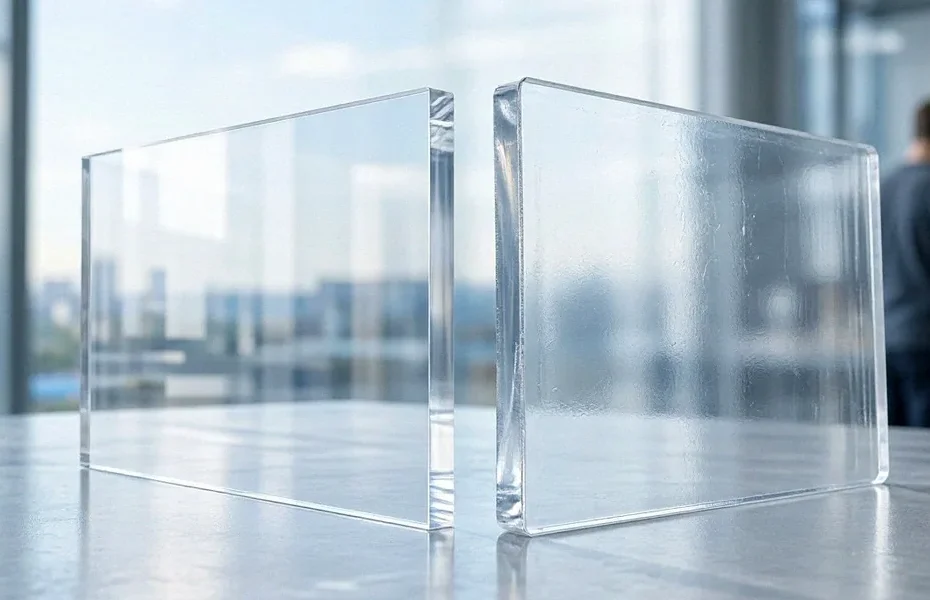
You are standing at the bench with two clear sheets in your hands. They look identical — same gloss, same transparency, same protective film peeling back at the corner. One is acrylic, one is polycarbonate, and picking the wrong one means a cracked display case, a foggy machine guard, or a wasted sheet and a wasted afternoon. We have watched this exact moment play out in workshops across the UK, so this guide breaks down the real differences between acrylic sheet and Perspex versus polycarbonate, from impact strength and UV behaviour to laser cutting, bending, and where to buy both in Britain.
What Are Acrylic and Polycarbonate Sheets?
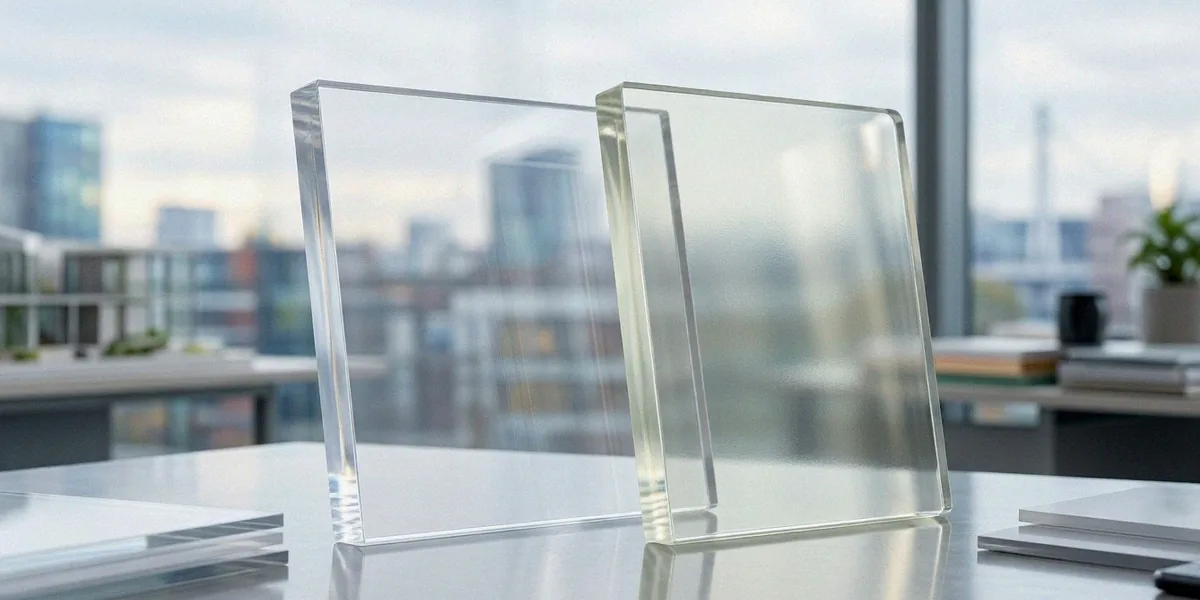
These are the two clear plastics UK fabricators reach for most often, and both sit under the broad umbrella of plastic fabrication materials. Acrylic is polymethyl methacrylate (PMMA), sold under brand names including Perspex, Lucite, and Plexiglas. Polycarbonate is a different polymer entirely, marketed as Lexan, Makrolon, and similar trade names. Both are available in thicknesses from around 2mm up to 25mm and beyond, though acrylic is more commonly stocked in the 3mm to 10mm range for display and signage work, while polycarbonate tends to appear in 4mm to 12mm for glazing and guards.
Acrylic: The Versatile Performer
Perspex is a UK-manufactured acrylic brand, originally developed by ICI in 1933, and it remains the name many British makers use generically for any cast acrylic sheet. Acrylic comes in cast and extruded grades, dozens of colours, and finishes from clear to frosted to mirror. It machines cleanly, polishes to a glass-like edge, and takes laser engraving beautifully. If you are building acrylic displays, retail signage, or decorative laser-cut pieces, this is usually your starting point.
Polycarbonate: The Tough Specialist
Polycarbonate earns its place through sheer toughness rather than versatility. It is the material behind riot shields, safety goggles, and machine guards, and it holds up where acrylic would shatter. It is also more flexible, which helps in applications where a sheet needs to absorb impact or be cold-formed into gentle curves. The trade-off is softer surface hardness, poorer scratch resistance, and more demanding fabrication behaviour.
Strength and Impact Resistance: The Core Difference
The headline number every fabricator should know: polycarbonate is approximately 200 times stronger than glass and 30 times stronger than acrylic. Lexan is the benchmark brand here, and the gap is not marginal — it is the single biggest reason to choose one material over the other.
How Each Material Fails
Acrylic does not stretch much before it gives. Under a sharp, concentrated impact — a hammer strike, a dropped edge, a football at close range — it cracks or shatters into shards. Under normal display use, though, it is perfectly sound. A Perspex sign, a retail acrylic display stand, or a laser-cut lampshade will last years without issue because nothing in that environment delivers the kind of point load that breaks it.
Polycarbonate behaves differently. It deforms, absorbs the energy, and springs back. It will dent and scratch, but it rarely fractures. For anything where people, tools, or machinery might hit the sheet, that behaviour matters far more than optical polish.
Real-World Testing and UK Standards
In the UK, impact performance is often assessed against standards such as BS EN 356 for security glazing and BS EN 1793 for machine guarding contexts. Polycarbonate routinely passes tests that acrylic simply cannot, which is why you will find it specified for school glazing, bus shelters, and industrial guards. If a project has a documented impact requirement, polycarbonate is usually the only compliant clear option.
Optical Clarity, UV Stability and Weathering
Both materials are optically clear, but they are not identical, and the difference grows over time outdoors.
Clarity and Light Transmission
Acrylic sheet typically transmits around 92% of visible light, compared to 88-90% for polycarbonate. That sounds trivial, but in a high-end display or an optical application, the extra clarity of acrylic is visible. Acrylic also has a slightly harder, glossier surface that resists hazing better in day-to-day handling.
UV and Long-Term Outdoor Performance
Acrylic resists yellowing under UV exposure far better than standard polycarbonate. Leave a plain polycarbonate sheet in a sunny window for a few years and it will drift yellow. Polycarbonate therefore needs UV-stabilised grades for outdoor use in the UK climate — and even here, the British weather matters. Our grey, wet winters are less punishing than Mediterranean sun, but south-facing installations still degrade unprotected sheet over time. For outdoor signage and long-life glazing, UV-stabilised polycarbonate or acrylic is the sensible choice.
Fabrication: Laser Cutting, Bending and Machining
This is where the two materials diverge most sharply on the workshop floor.
Laser Cutting and Engraving
Acrylic laser cuts to a polished, flame-like edge straight off the bed. It engraves with crisp contrast and smells distinctly of burnt sugar. Cast Perspex behaves more predictably than extruded sheet, which is why we recommend cast grades for anything involving deep engraving or edge-lit work.
Polycarbonate is trickier. It can discolour and stress-crack during laser cutting unless properly annealed, and the cut edge often needs secondary finishing. The material also tends to char rather than vaporise cleanly. If a job requires laser cutting, acrylic is almost always the better route.
Bending, Drilling and Finishing
Acrylic bends cleanly with a strip heater or in a line bender, holding a sharp fold once cooled. Polycarbonate bends too, but it is more springy and needs higher, more controlled temperatures. When drilling, acrylic wants a sharp bit and slow feed to avoid cracking; polycarbonate is more forgiving but grabs more readily. For polishing, acrylic takes a brilliant flame or diamond-polished edge, while polycarbonate tends to stay slightly duller.
- Acrylic: laser cuts to a polished edge, bends sharply, polishes to glass clarity.
- Polycarbonate: needs annealing before laser work, bends with springback, resists cracking under drill load.
- Cast acrylic: best for engraving, flame polishing, and solvent bonding.
- Extruded acrylic: cheaper, good for simple cuts, less reliable for deep fabrication.
Cost, Availability and UK Sourcing
Budget usually settles the argument before anything else does.
Budget Considerations for Makers
Acrylic is generally cheaper per sheet than polycarbonate at equivalent thickness. A 3mm clear acrylic sheet might cost roughly half what a comparable polycarbonate sheet does, and cast acrylic sits above extruded but still below polycarbonate. For high-volume display production, that gap adds up fast. Polycarbonate costs more but delivers impact resistance nothing else in the clear plastics family can match.
Where to Buy in the UK
UK suppliers such as Amari Plastics, Simply Plastics and Trent Plastics stock both materials, usually with cut-to-size services and next-day delivery on common thicknesses. We also keep both in stock for our own fabrication work, which means our team can advise on grade selection and supply small or large quantities depending on the job. Local plastics merchants are worth checking too — many will cut a sheet to your dimensions while you wait.
Choosing the Right Sheet for Your Project
There is no universal answer, but the decision usually falls out quickly once you know the application.
When Acrylic Wins
Choose acrylic for acrylic displays, retail signage, point-of-sale stands, laser-cut decorative pieces, edge-lit panels, picture framing, and any application where clarity, finish quality, and cost matter more than impact resistance. If it will be laser cut, engraved, or solvent bonded, acrylic is the natural fit.
When Polycarbonate Wins
Choose polycarbonate for machine guards, security glazing, riot shields, safety screens, roof lights, and any surface exposed to impact, vandalism, or heavy handling. If the sheet might be hit, kicked, or dropped, polycarbonate is the safe call — even at the higher price.
FAQ
Is Perspex the same as acrylic?
Yes. Perspex is a UK-manufactured acrylic brand, originally developed by ICI in 1933, and the name is now used generically for cast acrylic sheet in Britain. All Perspex is acrylic, but not all acrylic is Perspex.
Can you laser cut polycarbonate?
You can, but it is not ideal. Polycarbonate can stress-crack and discolour during laser cutting unless properly annealed, and the edges usually need secondary finishing. For laser work, acrylic is the better choice.
Which is clearer, acrylic or polycarbonate?
Acrylic sheet typically transmits around 92% of visible light, compared to 88-90% for polycarbonate, so acrylic has a slight edge in optical clarity. It also resists yellowing under UV better than standard polycarbonate.
Where can I buy acrylic and polycarbonate in the UK?
UK suppliers such as Amari Plastics, Simply Plastics and Trent Plastics stock both materials, often with cut-to-size options. We also stock both for our own fabrication work and can advise on the right grade for your project.
Is polycarbonate worth the extra cost?
If impact resistance matters, yes. Polycarbonate is approximately 200 times stronger than glass and 30 times stronger than acrylic, so for machine guards, security glazing, and impact-prone applications the extra cost is usually justified.
There is no single winner between acrylic and polycarbonate. The right choice depends on impact risk, budget, fabrication method, and UV exposure — and often on how the sheet will be cut and finished. Our advice is simple: order a small sample of each, test the fabrication process you plan to use, and let the material prove itself before you commit to a full sheet. That way the two identical-looking sheets in your hand stop being a gamble and start being a decision.